US Supreme Court Ruling on IEEPA Tariffs: Key Takeaways for Businesses and Policymakers
Author Inan Gupta, Senior Associate.
Executive Summary
On 20 February, the Supreme Court of the United States (‘SCOTUS’) held that the sweeping tariffs announced by the Trump administration last year, including ‘reciprocal tariffs’, were ultra vires. Consequently, the US Customs and Border Patrol (‘CBP’) has issued its formal guidance, stating that the tariffs would cease to be applicable from 24 February 2026.
Questions relating to refunds of duties already paid, and if so, conditions or procedures therefor, remain open, and interested parties are advised to confer with legal counsel for specific guidance tailored to their circumstances.
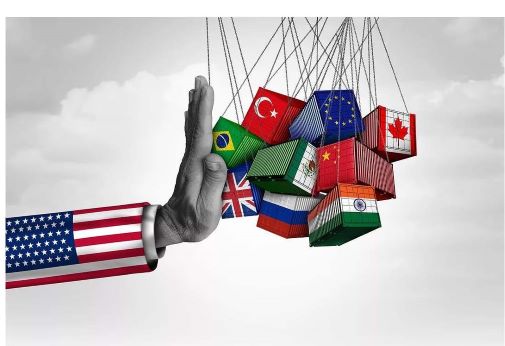
In light of the imminent withdrawal of the reciprocal tariffs, the Trump administration has also announced temporary tariffs of 10%, which would apply in addition to MFN duties and any other applicable duties (ADDs, CVDs etc) and will take effect from 24 February 2026. The duties may remain in force for 150 days, unless extended by the legislature. It is highly likely these measures are reportable to and reviewable by the WTO under GATT Article XII. Further trade measures pursuant to other legislations are also expected in the coming months.
The implications of this ruling on the various trade deals made under the spectre of the reciprocal tariffs, including the recently-announced framework on an interim agreement between India and the US, remain uncertain, though it remains a possibility that the scope of the agreement may be revisited.
The Scope of the SCOTUS Ruling
The International Emergency Economic Powers Act (‘IEEPA’) permits the President of the United States to take measures to ‘regulate international commerce’ in the event of a national emergency.
On 2 April 2025, the Trump administration declared that the ‘large and persistent’ merchandise trade deficit of the US amounted to a national emergency and accordingly, announced tariffs on merchandise imports from virtually all trading partners[1]. In February 2025, the administration had also declared a national emergency over trafficking of the narcotic fentanyl and declared tariffs on Canada[2], Mexico[3] and China[4] for purportedly enabling or facilitating such trafficking.
In August 2025, the administration also imposed tariffs on imports from India for its purchases of crude oil from Russia, in furtherance of a national emergency recognised earlier arising out of the conflict between Russia and Ukraine[5]. Though these tariffs were withdrawn on 6 February 2026[6], the withdrawal was contingent on fulfilment of certain continuing commitments, and therefore it is worth noting that these tariffs were also imposed pursuant to IEEPA.
On 20 February 2026, in Learning Resources v Trump[7], SCOTUS ruled that IEEPA did not authorise the President to unilaterally impose tariffs, as tariffs are essentially taxes and imposition of taxes is within the exclusive domain of the legislature, unless expressly delegated. Accordingly, all tariffs imposed by the President pursuant to IEEPA were ultra vires. Consequently, the Trump administration issued an executive order directing CBP to cease collection of tariffs imposed under IEEPA ‘as soon as practicable’[8]. The US CBP issued a formal guidance to this effect, stating that the tariffs would cease to be applicable from 24 February 2026[9].
The Question of Refunds
SCOTUS did not rule on the question of refunds. Therefore, as yet, there is no clarity on whether importers are eligible for refund of tariffs already paid. Clarity is expected to emerge only once the US Court of International Trade (‘CIT’), the court of first instance for international trade matters, issues its ruling on the cases filed before it requesting refunds.
Further, there is lack of consensus on the eligibility conditions for refunds. While it is possible the CIT may issue a carte blanche order directing universal refunds, it may also limit the scope of its orders to the specific appellants before it only. If so, companies would have to file appeals before the CIT specifically requesting refunds, and in fact, several companies have filed such ‘me-too’ appeals already.
However, the limitation period for filing such an appeal does not expire until either of (a) two years after the institution of IEEPA tariffs; or (b) two years after the date of entry of the specific entry that was subject to IEEPA tariffs[10]. Further, CIT has clarified that filing of protests with the CBP regarding liquidation of entries is not necessary for claiming refunds[11]. Therefore, unless a party has very significantly high stakes, waiting for further clarity to emerge is advisable, since the costs involved in pursuing such claims is likely to be high.
Potential Trade Measures Under Other Legislations
In view of the imminent withdrawal of the tariffs imposed under IEEPA, the Trump administration has announced a tariff of 10% on merchandise imports from all countries to address a ‘balance-of-payments disequilibrium’, pursuant to Section 122 of the Trade Act, 1974[12]. Thought it was announced by the administration shortly thereafter that the tariff would be levied at 15% (the maximum permissible rate under the provision)[13], the official proclamation has not yet been revised to reflect this, and the guidance issued by CBP prescribes a rate of 10%[14]. The tariffs are set to take effect from 24 February 2026, and will be levied in addition to existing MFN duties and any other duties (anti-dumping duties, countervailing duties etc) as applicable. The tariffs can remain in force for a maximum of 150 days, unless extended by the US Congress (the federal legislature of the US).
It is worth noting that under Article XII of GATT and the Understanding on the Balance-of-Payments Provisions of the General Agreement on Tariffs and Trade 1994[15], measures taken to address balance-of-payments issues are reportable to the WTO Committee on Balance-of-Payments, which is mandated to carry out consultations in order to review all restrictive import measures taken for balance of payments purposes.
In the coming days, it is expected the administration may also take a variety of other measures to re-institute the tariffs in effect. The most prominent recourses available with the administration are summarised below.
| Legal Provision | Legal Grounds | Procedural Requirements | Temporal Limit | Tariff Ceiling |
| Section 232, Trade Expansion Act, 1962 | Threat to national security | Investigation by US DOC | N/A | N/A |
| Section 201, Trade Act, 1974 | Serious injury to the domestic industry | Investigation by US ITC | 4 years (extendable to 8 years by executive action) | 50% |
| Section 301, Trade Act, 1974 | Violation of rights of the US under an international trade agreement or burden or restriction on US commerce | Investigation by USTR | 4 years (extendable indefinitely by executive action) | N/A |
| Section 122, Trade Act, 1974 | Large and serious balance-of-payments deficit | N/A | 150 days (extendable indefinitely with legislative approval) | 15% |
| Section 338, Tariff Act 1930 | Discrimination against US commerce | N/A | None | 50% |
Impact on US India Trade Deal
On 7 February 2026, India and the US announced the finalisation of the framework for an interim trade agreement[16]. Pursuant to the agreed framework, the rate of levy of reciprocal tariffs was to be decreased from 25% to 18%. In light of the withdrawal of the reciprocal tariffs pursuant to the SCOTUS verdict, there is some uncertainty regarding the deals, since the reciprocal tariffs were a core issue under negotiation and presumably formed the basis for multiple concessions.
The framework provides that ‘in the event of any changes to the agreed upon tariffs of either country, the United States and India agree that the other country may modify its commitments’. Therefore, in view of the withdrawal of the reciprocal tariffs, it remains a possibility that the scope of the trade agreement may be revisited, especially since only a framework has been agreed upon and an agreement, interim or final, has not been signed yet. However, it may take some time for clarity to emerge on this issue.
[1] Executive Order 14257 of 2 April 2025 (Regulating Imports With a Reciprocal Tariff To Rectify Trade Practices That Contribute to Large and Persistent Annual United States Goods Trade Deficits) (United States, 2 April 2025)
[2] Executive Order: Imposing Duties to Address the Flow of Illicit Drugs Across Our National Border (United States, 1 February 2025)
[3] Executive Order: Imposing Duties to Address the Situation at Our Southern Border (United States, 1 February 2025)
[4] Executive Order: Imposing Duties to Address the Synthetic Opioid Supply Chain in the People’s Republic of China (United States, 1 February 2025)
[5] Executive Order 14329 of 6 August 2025 (Addressing Threats to the United States by the Government of the Russian Federation) (United States, 6 August 2025)
[6] Executive Order: Modifying Duties to Address Threats to the United States by the Government of the Russian Federation (United States, 6 February 2026)
[7] 607 U.S. ____ (2026) | Docket No. No. 24–1287
[8] Executive Order: Ending Certain Tariff Actions (United States, 20 February 2026)
[9] CSMS # 67834313 – Ending Collection of International Emergency Economic Powers Act Duties (U.S. Customs and Border Protection, 22 February 2026)
[10] 28 U.S.C. § 1581(i)
[11] AGS Company Automotive Solutions v. United States, CIT Slip Op. 25-154
[12] Proclamation: Imposing a Temporary Import Surcharge to Address Fundamental International Payments Problems (United States, 20 February 2026)
[13] President Trump 15% tariff increase after Supreme Court decision The Hindu (online, 23 February 2026)
[14] CSMS # 67844987 – Imposing Temporary Section 122 Duties (U.S. Customs and Border Protection, 23 February 2026)
[15] Understanding on the Balance-of-Payments Provisions of the General Agreement on Tariffs and Trade 1994, WTO Doc 09-BOPS (adopted 27 August 2002)
[16] Press Release, Press Information Bureau, Government of India (Release ID: 2224783) (Press Information Bureau, New Delhi, 7 Feb 2026)